Granite
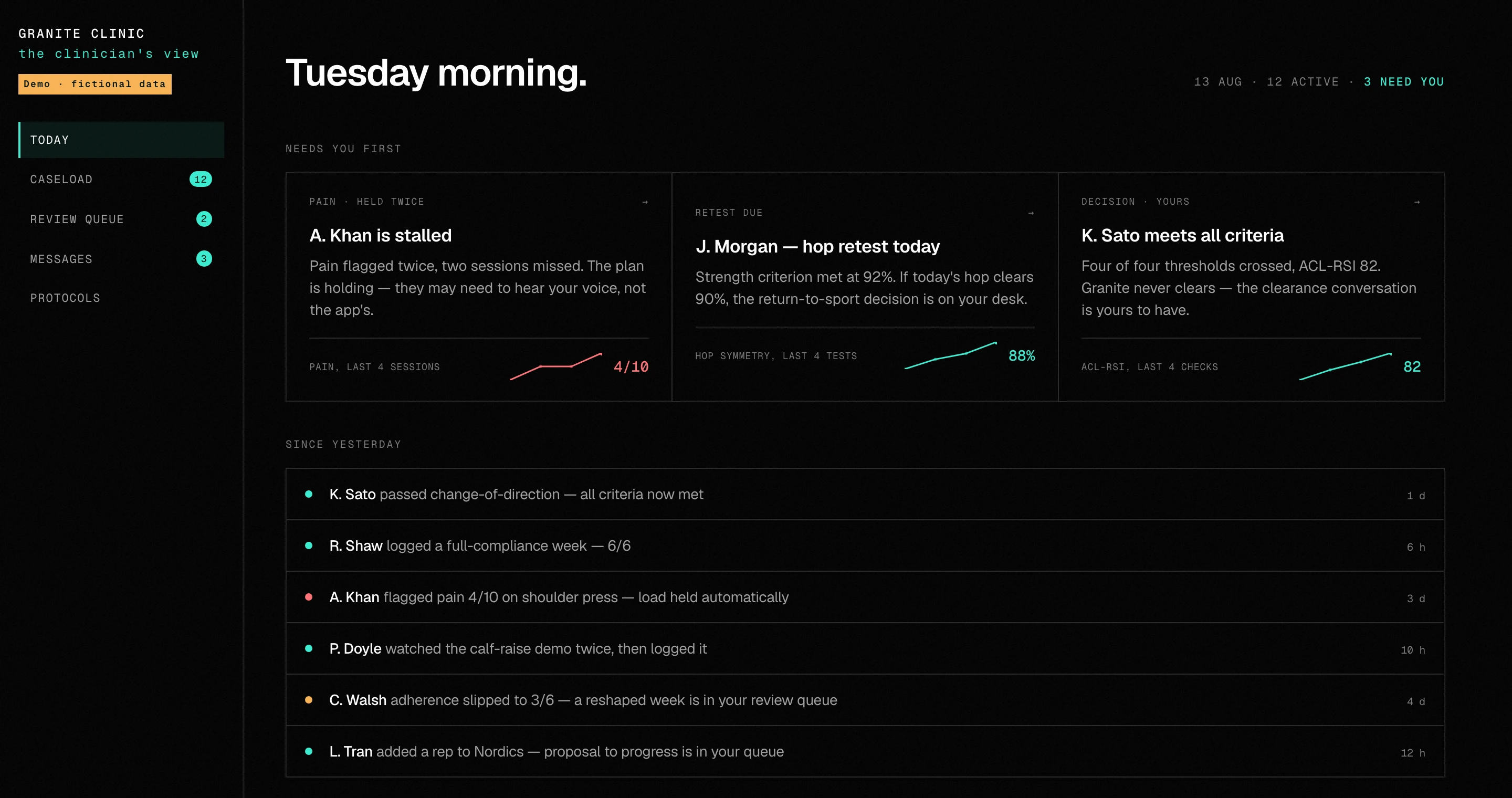
Rehab planning for physiotherapists — proposes and monitors, never clears. The same engine also coaches athletes whose sport isn’t lifting.
01 / GRANITE
Granite is now piloting as a rehab-planning tool for physiotherapists: Granite Clinic proposes and monitors a patient’s plan between visits, and never clears them — that call stays with the clinician. The engine underneath is the one that already coaches athletes whose sport isn’t lifting: not a plan you follow, but reasoning that runs on fixed rules, not guesswork, entirely on-device. Every decision it makes can be traced, tested, and trusted — which is exactly what it takes to stand behind a plan someone else’s body depends on.
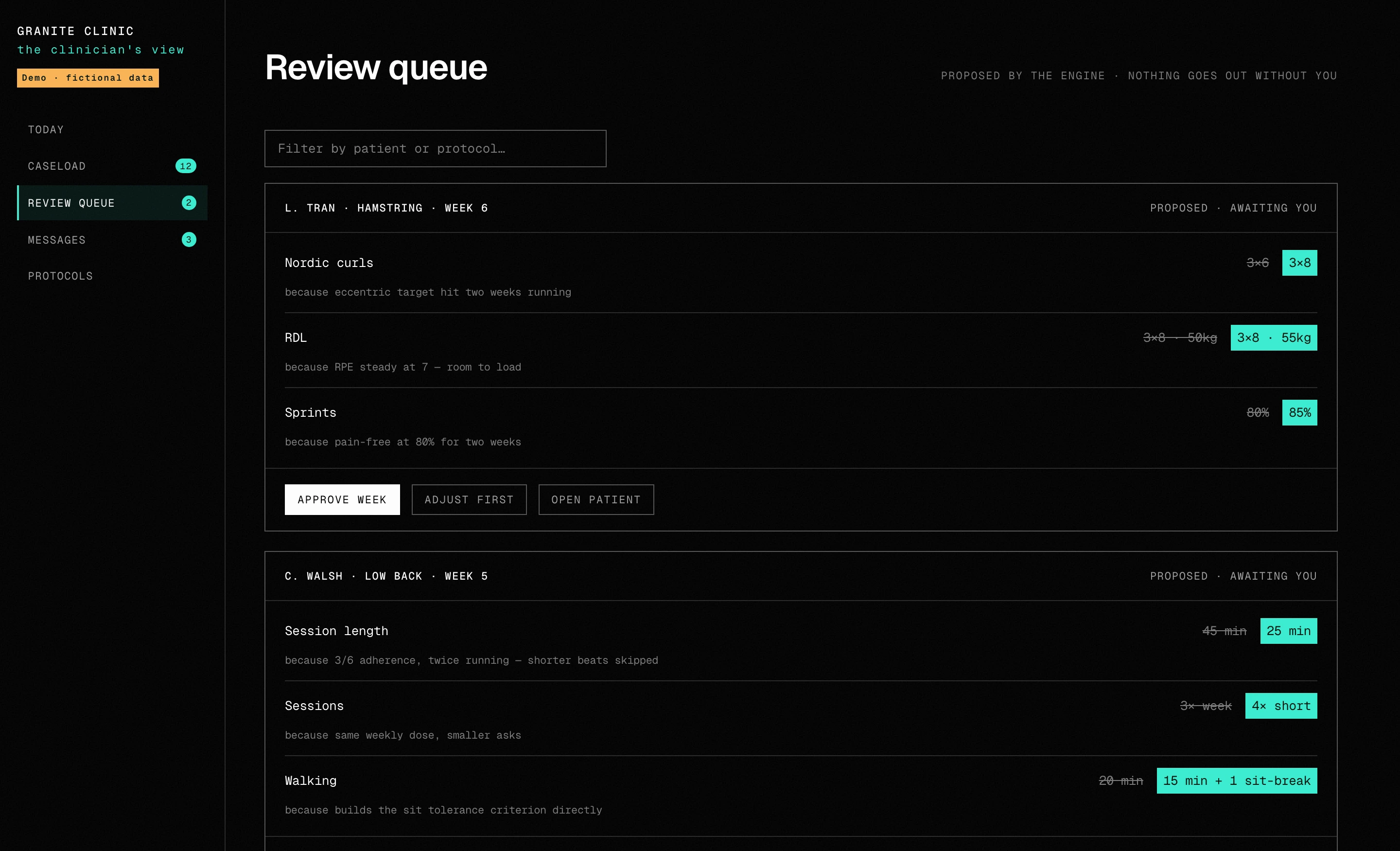
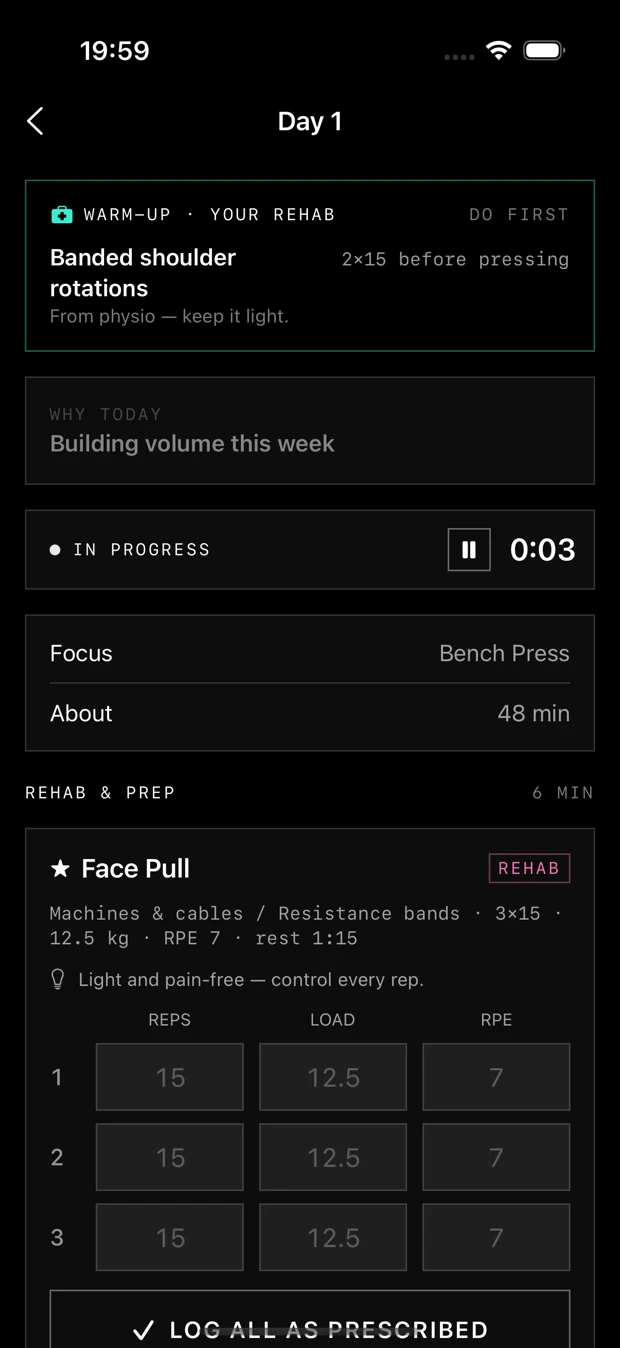
One mechanism underneath all three: training adapts to the person, or the person quietly stops training.
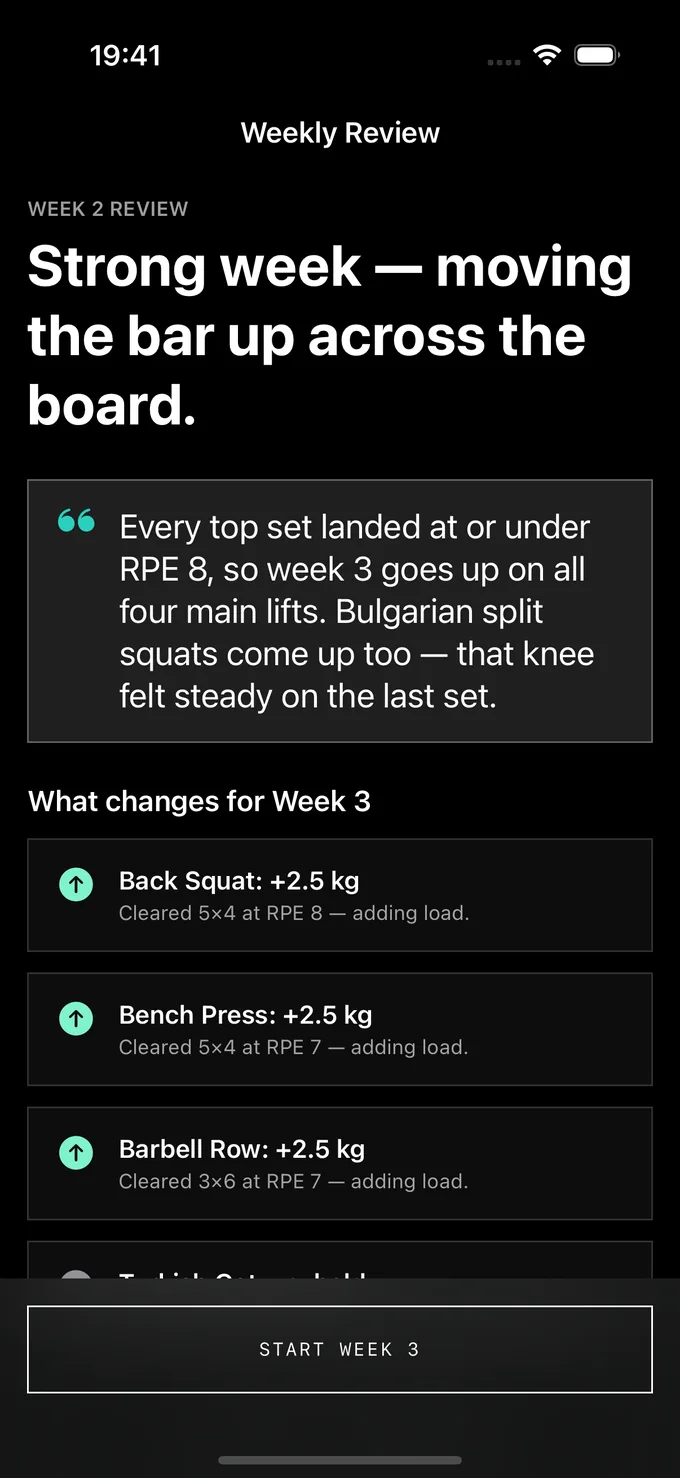
1For the person training
You do not need more discipline, you need a week that survives contact with your life. Granite rewrites it and tells you what changed.
2For the people who prescribe
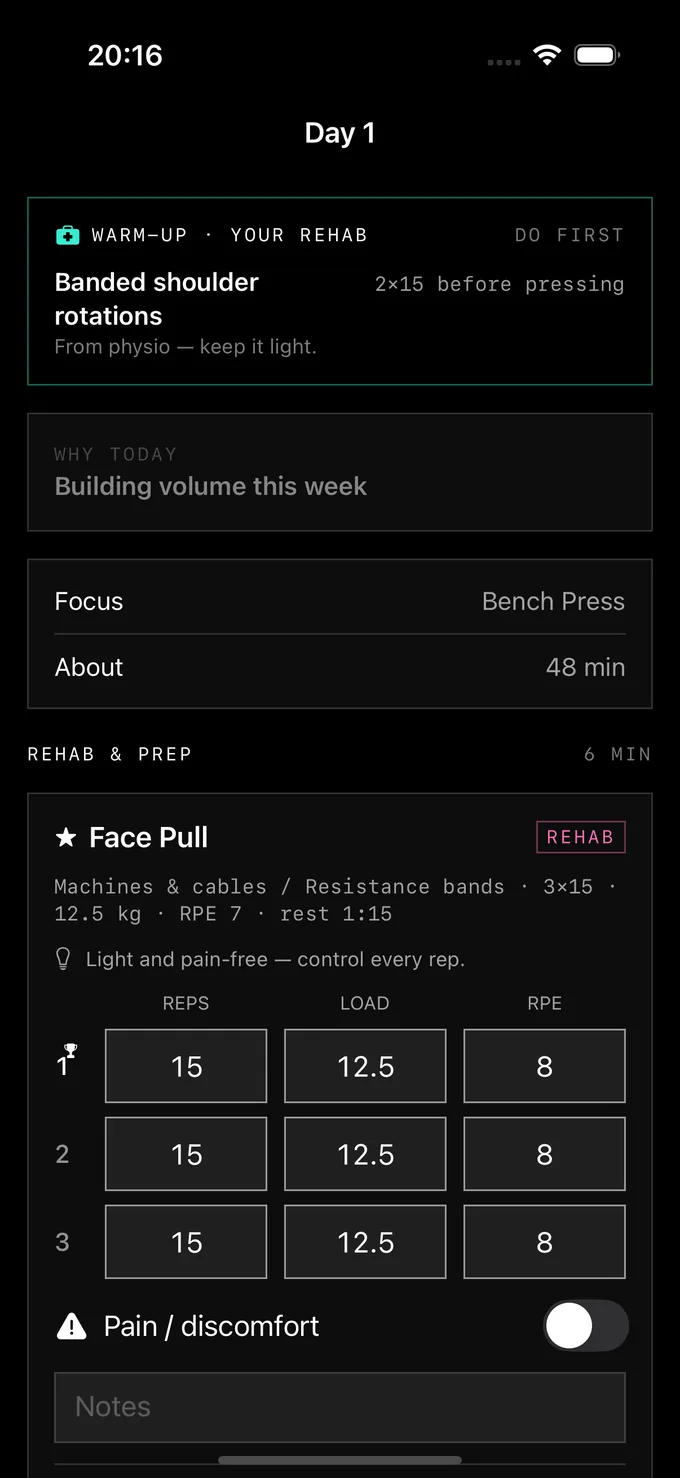
Coaches and clinicians cannot stand behind a black box that will not show its reasoning. The same engine now also runs Granite Clinic, a separate product piloting with practising physiotherapists — it proposes and monitors a rehab plan between visits. It never clears.
A coach, not a plan
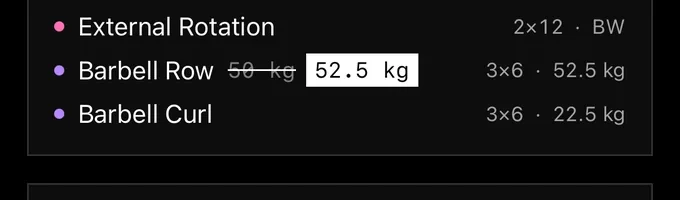
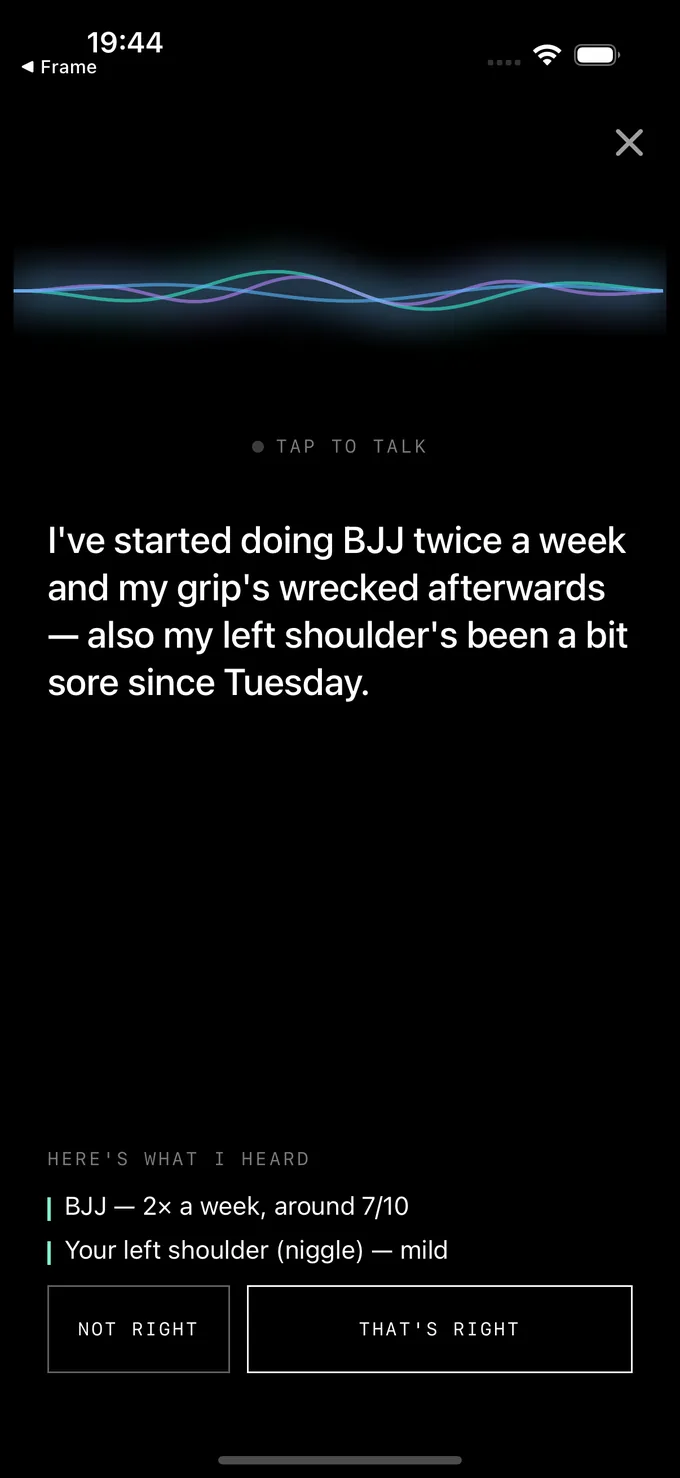
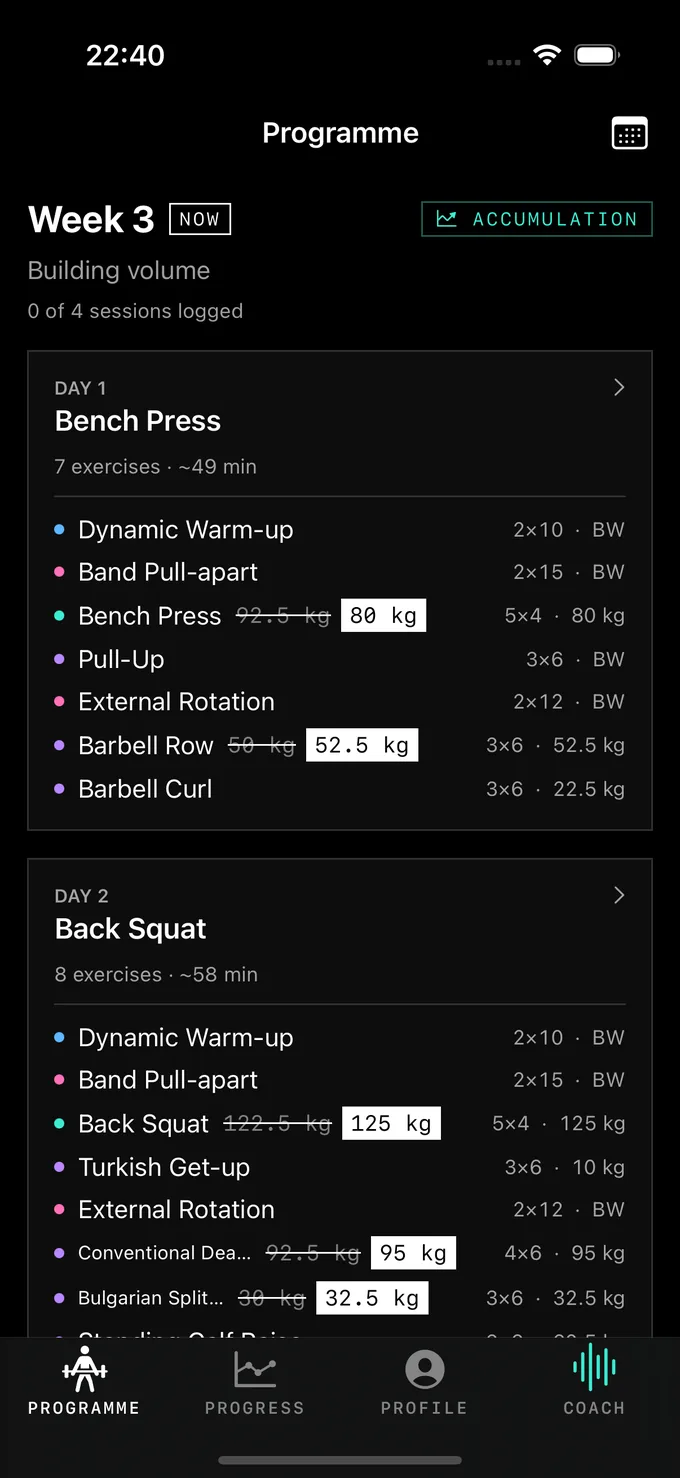
Most training apps hand you a fixed plan and hope you follow it. Granite works the other way round. It reasons — taking your goals, your experience, the days you actually have, your injuries, and the load you carry off the platform — and builds a week that fits your real life.
When something changes, it rewrites, and tells you why. Not a plan you obey. A coach that adapts.
The engine is the product
Granite’s intelligence runs on fixed coaching rules, not AI guesswork — a deliberate choice, not a limitation. It means every plan is consistent, every decision can be traced, and the whole system can be tested against real coaching principles rather than hoping a black box got it right.
Accountable intelligence beats impressive intelligence when it’s your body on the line. We built the engine first, and everything else serves it.
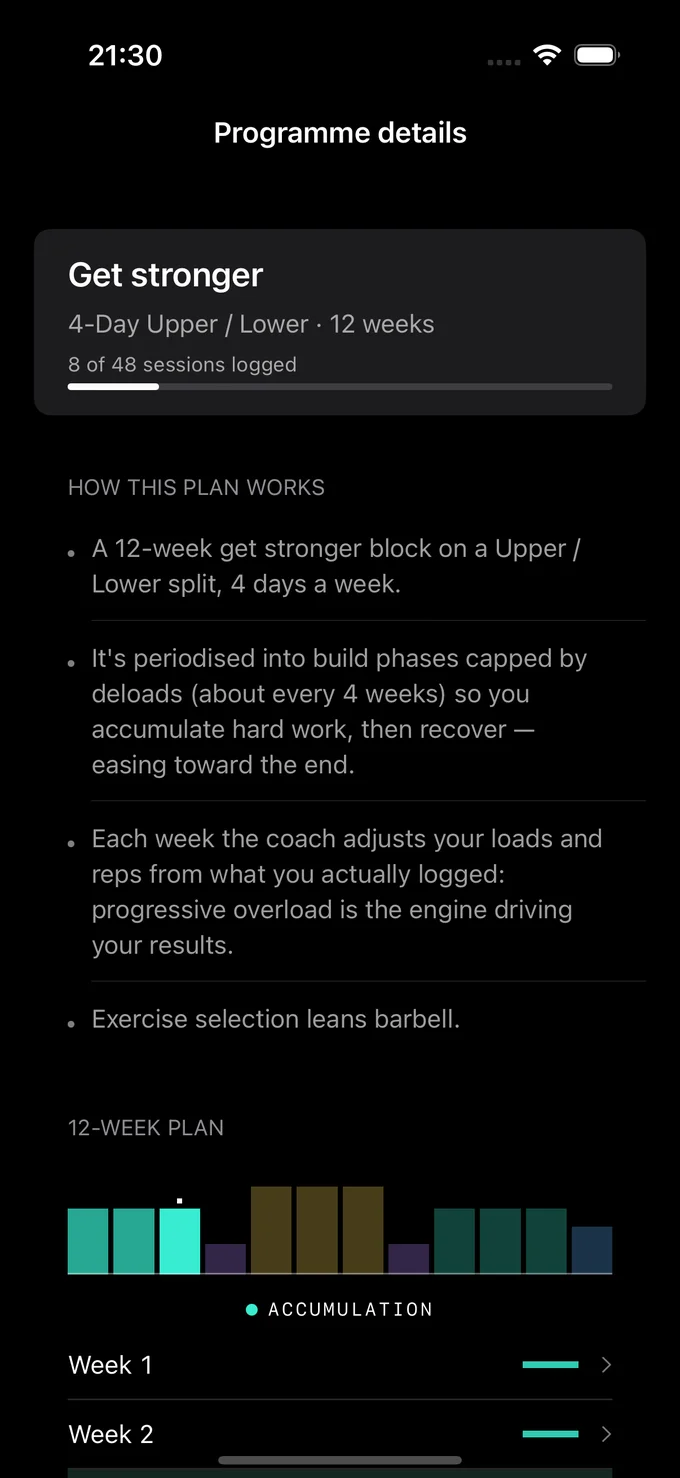
On-device by decision
Granite runs entirely on your phone. No account, no cloud, no data leaving your hands — the privacy isn’t a policy you have to trust, it’s the architecture. Running locally was the harder path, and it made the product sharper: an engine that can’t lean on a server has to do its thinking right there, on your phone, the instant you need it.
That constraint is the craft. Spotting a plateau, checking a week’s volume against the evidence — the kind of analysis most apps would phone home for — happens instantly, with nothing leaving your hands.
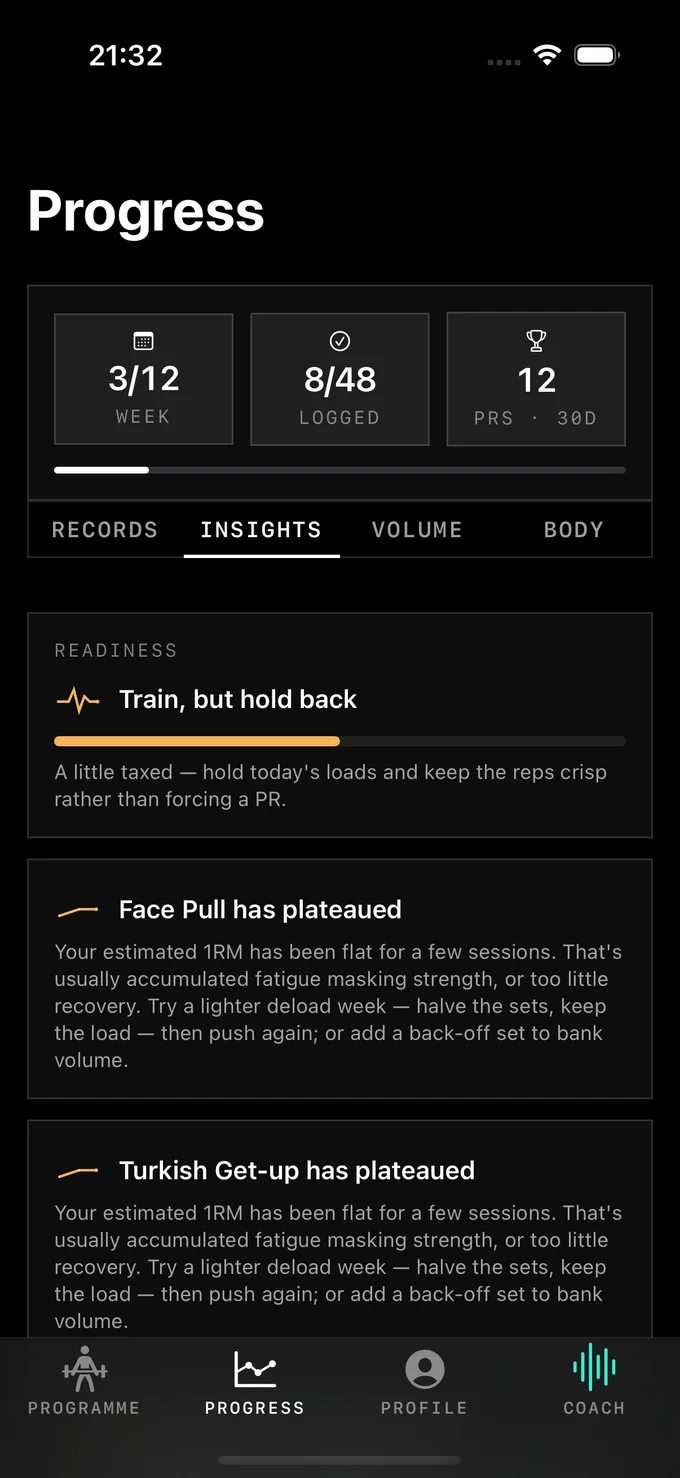
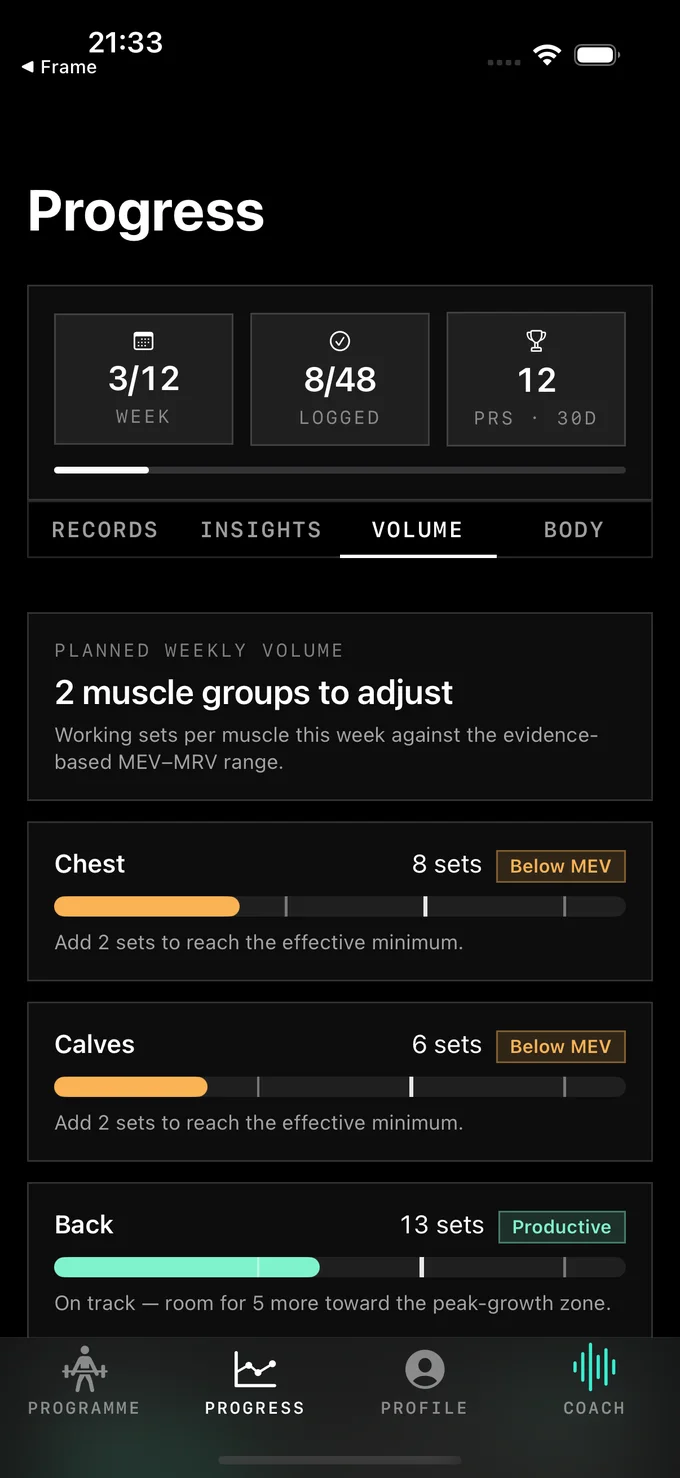
Made before the app existed.
+Kept
- A rule-based engine you can trace
- On-device — no account, no cloud
- A weekly rewrite that explains itself
−Cut
- An AI black box guessing your plan
- Cloud sync and sign-in
- Streaks, badges, a feed to scroll
We almost shipped cloud sync in week three — it would have made onboarding one tap and the demo look cleaner. We killed it because the moment your training history touches our servers, “on-device and accountable” stops being an architecture and becomes a marketing line. The harder path was the product.
Scope. What is public here is the consumer app. The engine underneath it was built to serve more than one reader — and those surfaces stay off the site until they ship. The architecture is the asset; publishing how it decides is not.