Frame
A BJJ training journal built against the forgetting curve.
02 / FRAME
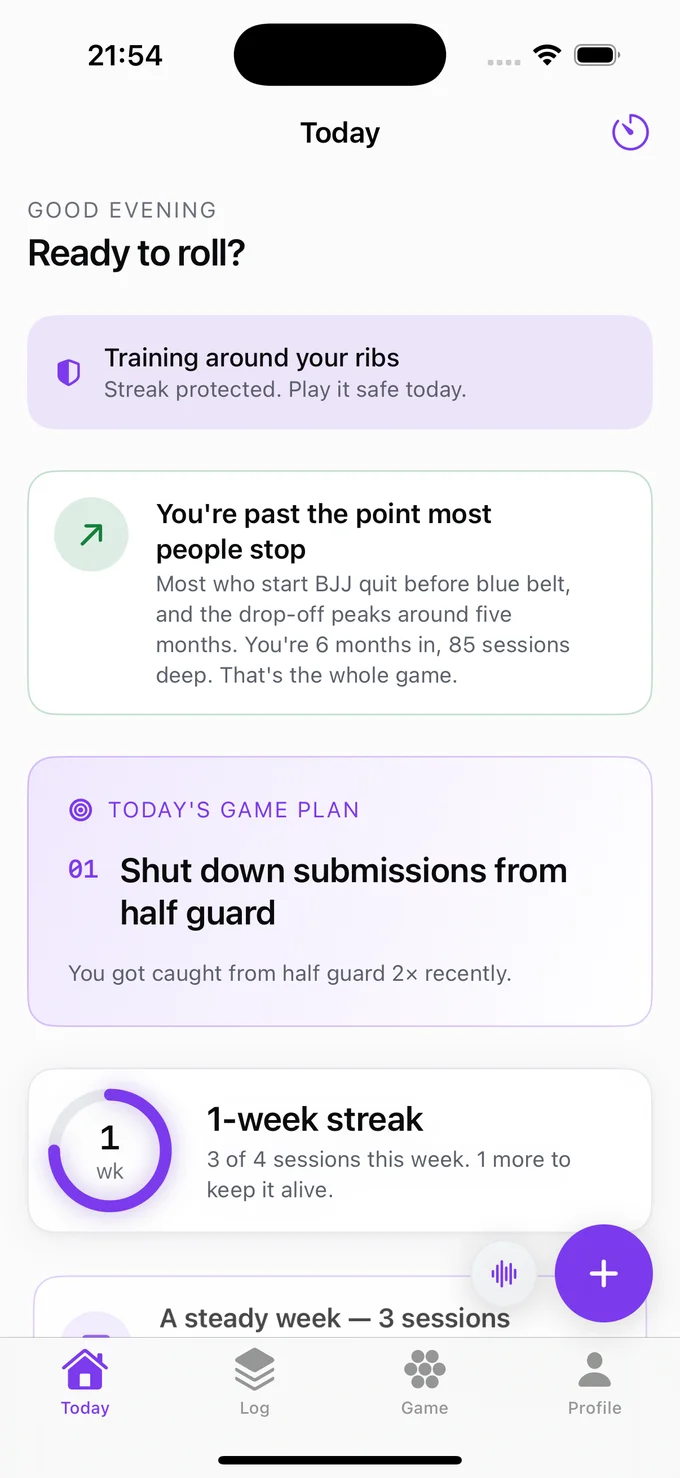
Frame is a training journal for Brazilian Jiu-Jitsu (BJJ), built on a hard truth: you forget most of what you’re taught within days. Log a session in thirty seconds by voice, and Frame holds every technique, brings it back just before you’d forget it, and shows you — in plain data — that you’re actually improving. Built for anyone who’s felt stuck at their belt, so they have a reason to keep turning up.
Different belts, different excuses, one mechanism: when progress goes invisible between classes, people drift.
Belt-attrition figures are community estimates, not studies — we treat them as the shape of the problem, not proof of it. ~6M practitioners worldwide (Gymdesk); median UK adult membership £70/mo (Matador, 2026).
1For the individual
You forget most of what you’re taught within days, and you can’t see yourself improving. Frame holds the detail and shows you the proof.
2For the room
The cheapest growth in jiu-jitsu is the member you already have, kept one more year. A room that can see its own progress is harder to leave.
Built against the forgetting curve
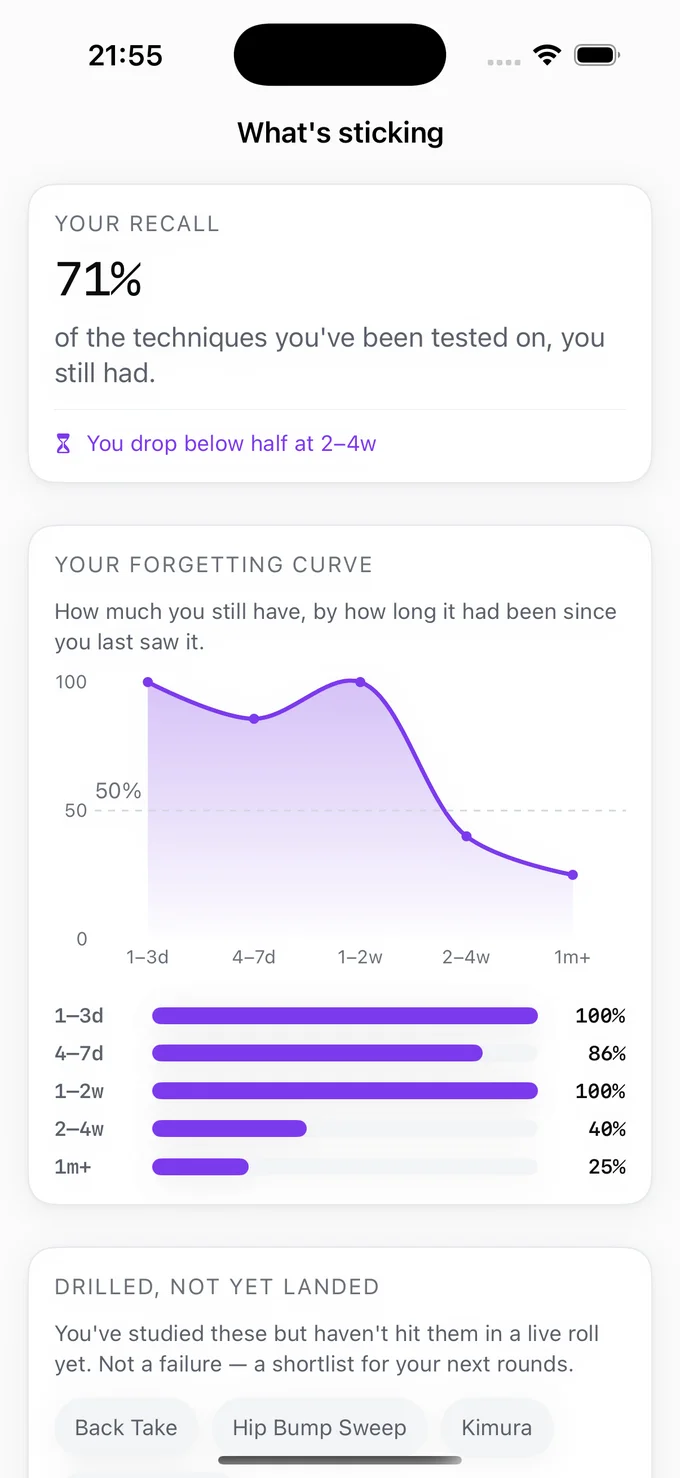
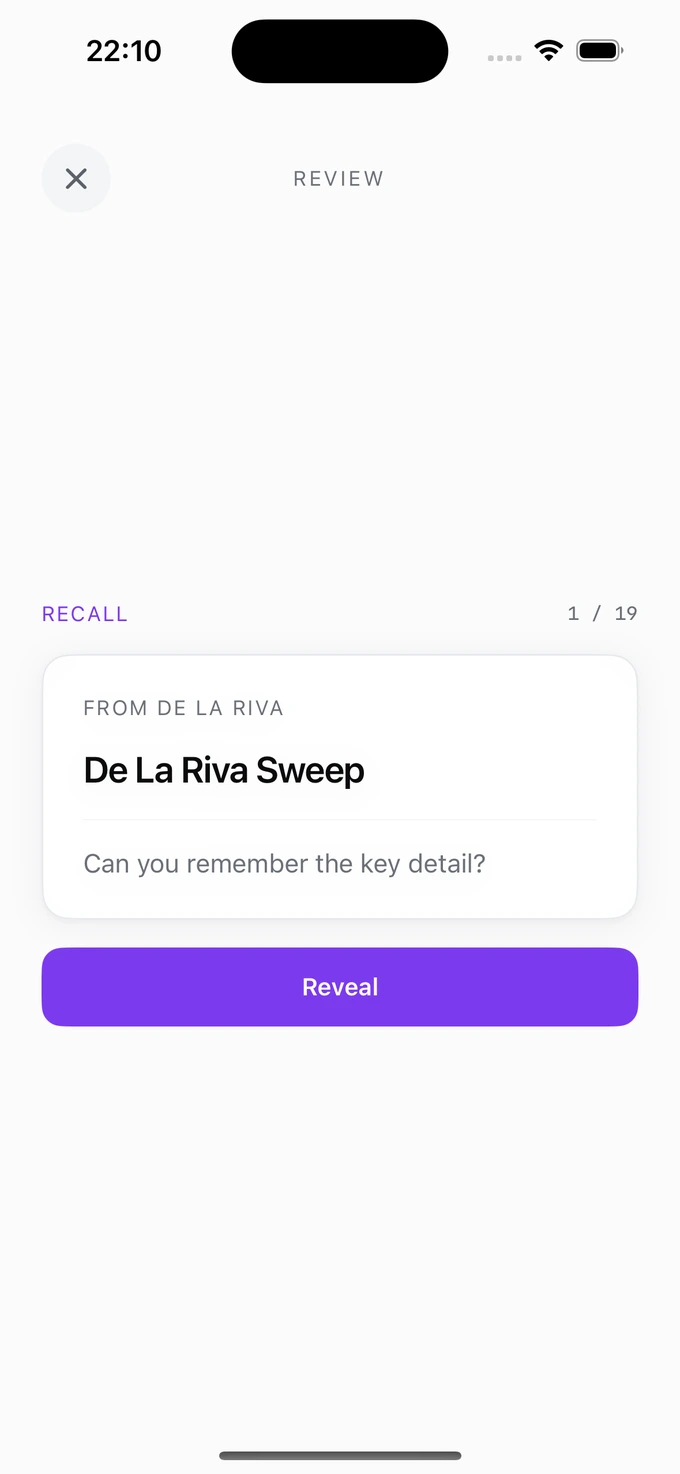
A single session throws four or five details at you — the grip, the angle, the small correction that made the sweep finally work — and within a week almost all of them are gone. Frame is built around that decay rather than despite it.
Everything you log comes back to you on a schedule: a few days later, then a week, then a month, timed to land just before you’d lose it. There’s nothing to revise and no flashcards to sit down with — the app works out what’s about to fade and puts it in front of you. Retention is the product, and it’s the one thing a notebook has never done.
The log you’ll actually keep
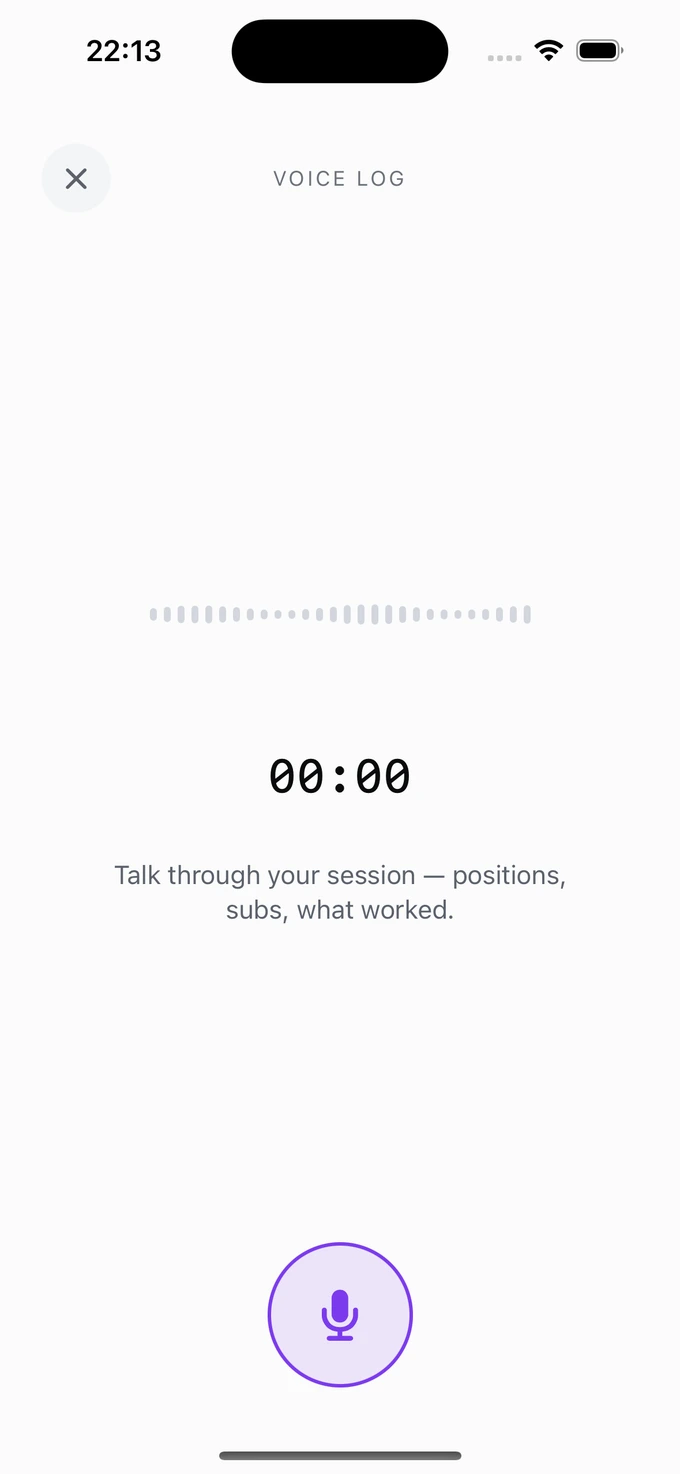
Everyone knows they should keep a training journal. Almost nobody does, because writing one up after an hour of getting choked is the last thing you want to do.
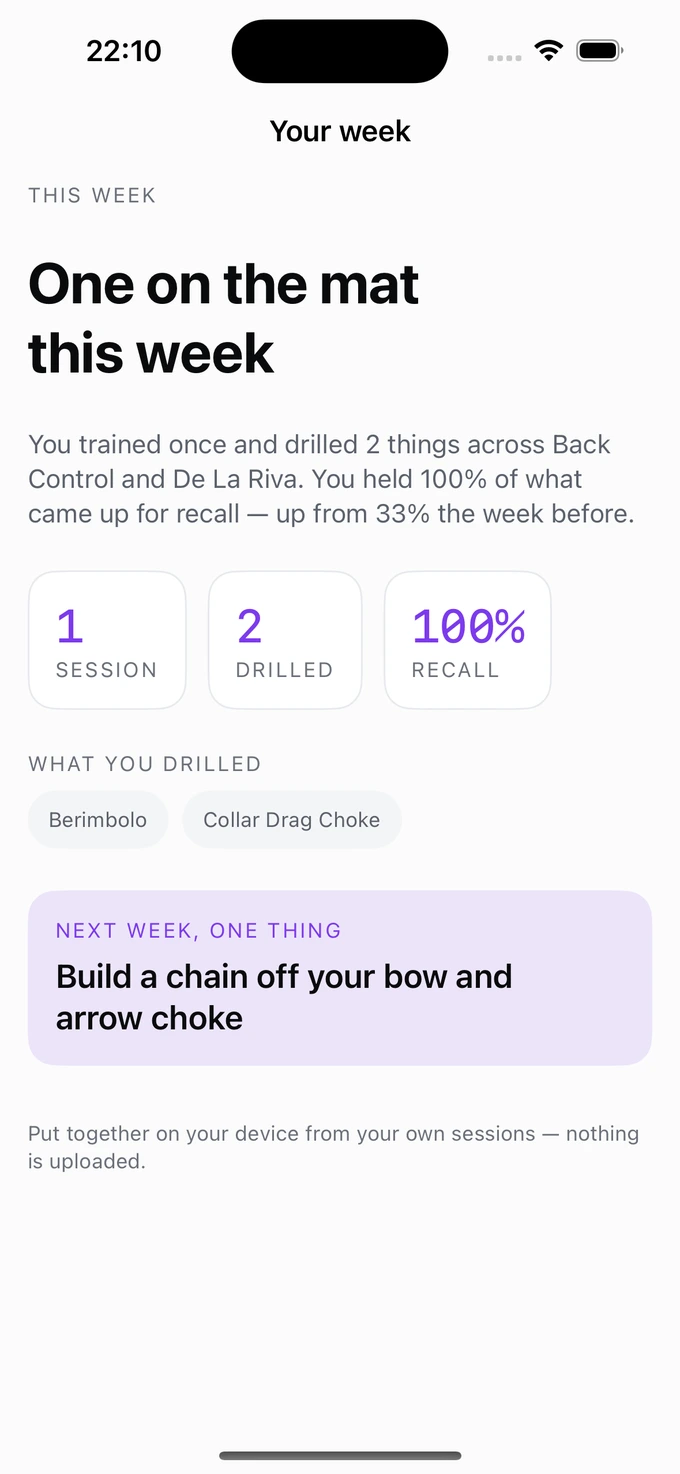
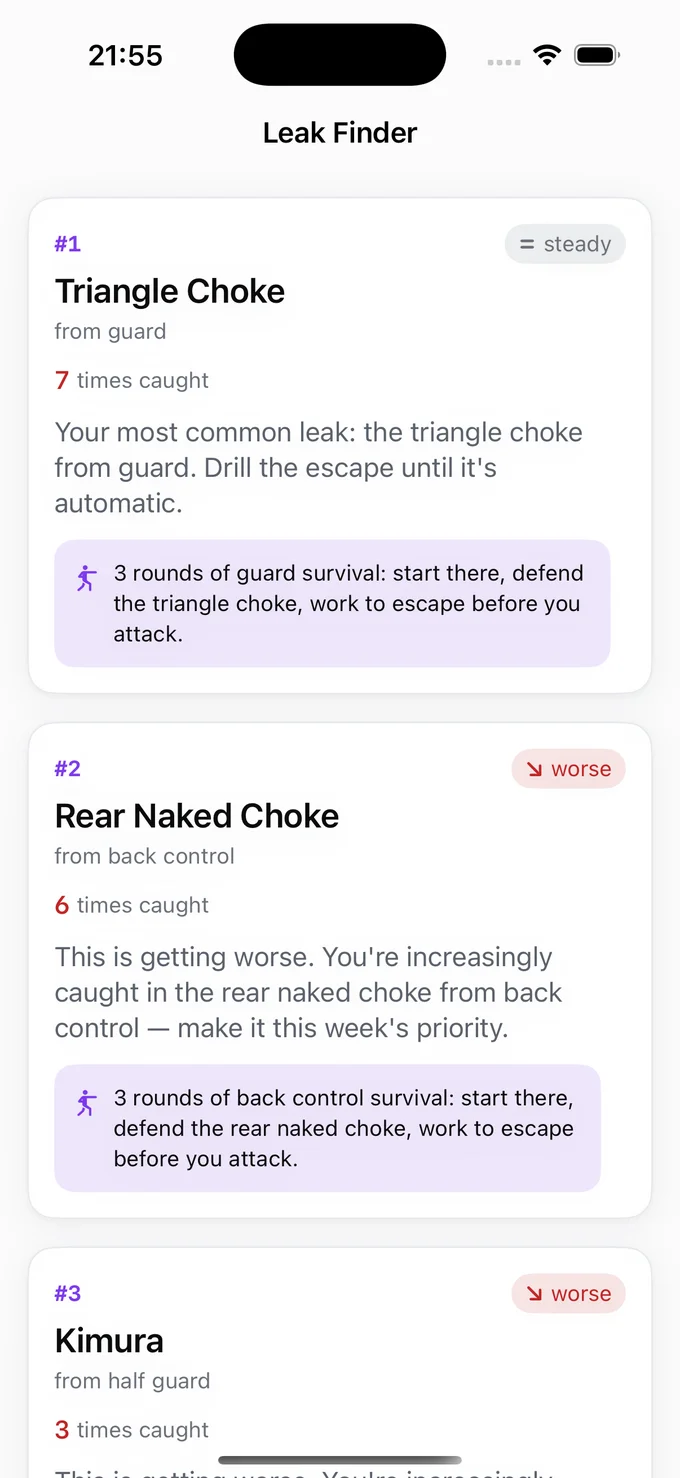
Frame removes the friction: talk for thirty seconds — “started in closed guard, hit a scissor sweep to mount, got swept, tapped to an armbar” — and it transcribes on-device, turns it into a structured session, and hands back a weekly read on your game. Nothing typed, nothing uploaded.
The progress you can’t feel
Frame runs offline-first and keeps your training history yours — saved the instant you log it, private, exportable, never sold. It’s hundreds of hours on the mat; it doesn’t belong on someone else’s server.
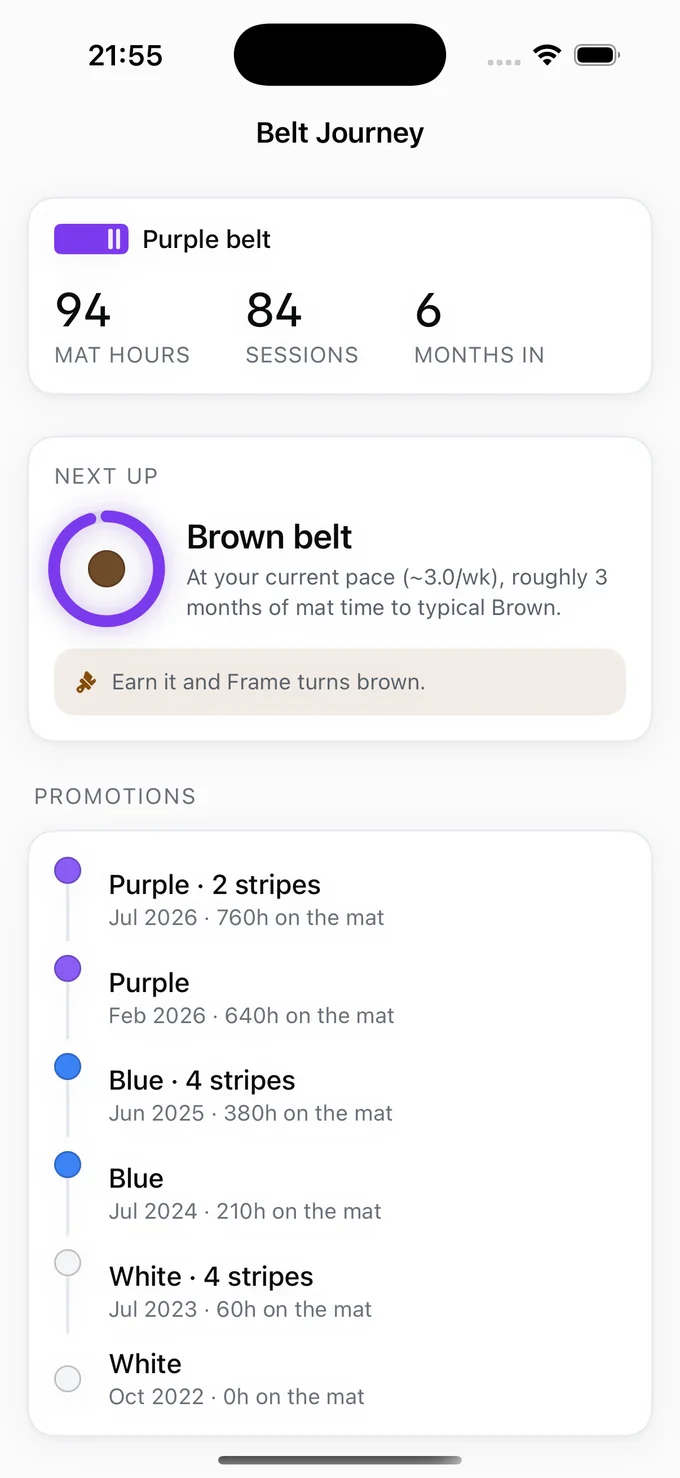
The goal underneath every decision is simple and hard: make the progress you can’t feel visible, so the people who’d otherwise quit have a reason to come back for the next stripe — not more features, but more people still on the mat a year from now.
Made before the app existed.
+Kept
- A thirty-second voice log, transcribed on-device
- Recall timed to the forgetting curve
- Your training history, private and exportable
−Cut
- Typing up a session after training
- A social feed to scroll
- Your training history living on our servers
We scoped Frame typing-first, with voice as a nice-to-have. Every test said the same thing: if logging costs more than thirty seconds, nobody does it — and a journal nobody keeps is worthless. So voice became the product and typing the fallback. The exact opposite of how we’d planned it.
Scope. What is public here is the athlete's app — the first surface of a longer system, and the only part we will show until it has earned the next. The work behind it, and who it is being built with, stays off the site on purpose.